When the impossible becomes possible…

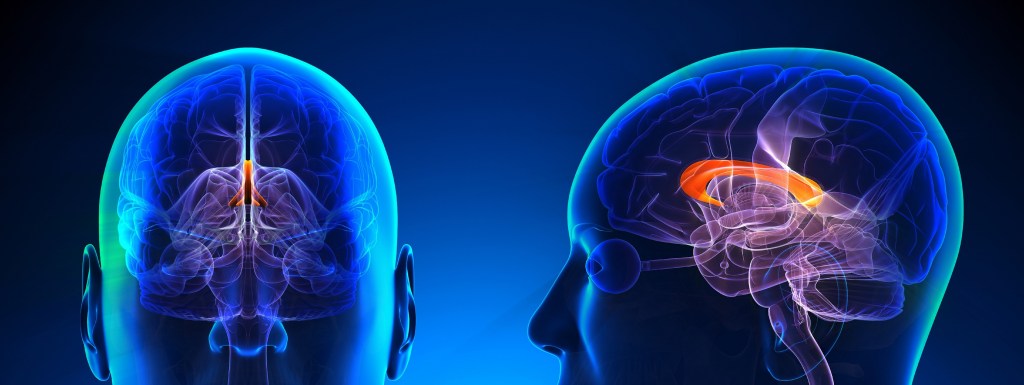
Male Corpus Callosum Brain Anatomy – blue concept

I have just finished a lesson with one of my young learners where I witnessed a small miracle. A few weeks ago, we started learning scales on the piano and, as is my custom, we started with his right hand only. Gradually his fingers got accustomed to the motion needed to realise the required sound and soon it was time to learn to play the left hand. Again, gradually, he was able to realise this also and we then started on him playing both hands together. The first few times he attempted this, the results were not pretty at all. He stumbled and fumbled and got all mixed up. I left it with him, gently coaxing and encouraging him each lesson to keep trying. And he did. Today he played that scale hands together, effortlessly. It was as if he was always able to play it just like that. The pain and frustration of the past had become a distant memory. And my heart was filled with joy because of what I realise had happened, unnoticed, in his brain to allow him to execute a near flawless scale.

Neurology helps us understand that when playing the piano with both hands, we are forcing both sides of our brains to work together and by so doing, we strengthen the nerve cells that run between the left and right sides of the brain – the corpus callosum. A strong corpus callosum enhances the brain’s capacity to process information faster. By being persistent at learning this skill, my student had strengthened the section of his brain that was needed to process this particular task. And those “brain muscles” are here to stay. The more he continues to practice this and similar skills, the stronger that part of his brain will get and he will be able to use that enhanced processing capability in other areas of life. Not just music.

Neurology tells us that learning to play an instrument permanently alters the shape of a musician’s brain – for the better. So, when we moved on to his next task, which was to play the left hand of one of his pieces, I smiled to myself as he exclaimed – “but that’s impossible!”. Slowly, we worked through each bar of the piece and when we got to the end of the first page, he exclaimed – “actually, that was easy!”. And it was easy – due in part to the fact that his brain recognised some of the patterns in the piece and was able to quickly direct his hands on how to move.

I love the fact that my music room – both virtual and in-person – is in some ways like a laboratory and a gymnasium combined, where I get the satisfaction of watching my learners develop muscles and tone in places they never imagined they could. This is one rewarding experience that I will never tire of. Ever.

Serving Generation Alpha

Photo by Julia M Cameron from Pexels

The last three months have been intense. It felt like we slammed on the brakes hard while simultaneously manouevering round a tight corner at top speed on the edge of a cliff, not sure whether we would survive the experience.

So, we had our first virutal music summer camp this week, I must say with some trepidation. We have never been here before (neither have 90% of the music education industry). But we made a conscious decision at the onset of COVID to embrace technology and remain as relevant as we could be in the new age in which we find ourselves. And so my team and I worked hard to create a series of Olympic themed music programmes to be delivered entirely virtually.

But this week, we discovered something we were not expecting. We found that the children for whom we were making this transition had arrived at the destination before us. They were settled and comfortable in this digital space. For them, the virtual world has always been home. The rest of us where simply catching up.

The children in our summer camp age bracket are known as Generation Alpha, the first generation to be born entirely in the 21st century. These children have no experience of a world pre smartphones. Their parents are mostly millenials and are themselves, digitally savvy, using technology in a myriad of ways in both corporate and domestic settings.

For Generation Alpha, technology is part of their identity. All the content of our virtual camp is delivered using a myriad of digital tools and I was worried about the technical complexity behind the programme. However, many of the children took to it like a duck to water. The testimonial of this parent below is a case in point:

Having said that, the most popular sessions were those that involved using technology to interact with other children. Thanks to technology, we were able to group the children in all sorts of interesting ways so they could build friendships across school and indeed geographic borders as we had children from outside Nigeria take part. It seems like while Generation Alpha are likely to be the most tech savvy people on the planet, their preference is for technology that fosters human connection. And long may that be.

Next week therefore, we will build in more interaction between our “Olympiads” and incorporate a lot more collaborative activities. I am excited about where this Generation can take us and I look forward to learning as much from them, (and probably more), as they would from me.

While we must take seriously our responsibility for safe-guarding the welfare of our children both online and offline, let us not allow our anxieties to hold them back from experiencing the many positive experiences that technology, used wisely, can provide.

Without A Vision…

6 Months Vision Challenge

So this morning, I was challenged by my journal to envision where I would be in six months time and to schedule an email to myself to arrive on that date, describing where I hope to be by then. As it happens, six months from today will be the 4th of January 2021. The first Monday of that year. I had a lot to write and the email has been scheduled for delivery on that day, thanks to the magic of modern technology.

This made me think about the goal setting exercise my team and I do at the beginning of each term for every one of our students, where we envision and write down what skills we want them to have acquired by the end of term.

The process of thinking through and writing down a vision helps to focus the mind and directs effort in an intentional, often unconscious manner.

The Bible says “without a vision my people perish”. It’s one thing to have a grand vision but this can sometimes be overwhelming and seem unattainable.

Setting micro visions to be achieved within a reasonable time frame motivates and inspires action.

So, go ahead and write that email to yourself. Where would you want to be on the 4th of January 2021 and what needs to happen to get you there?